Cooking Without a Recipe: A Framework for Weeknight Meals
Learn a repeatable meal structure and turn whatever is available into dinner without starting from zero.

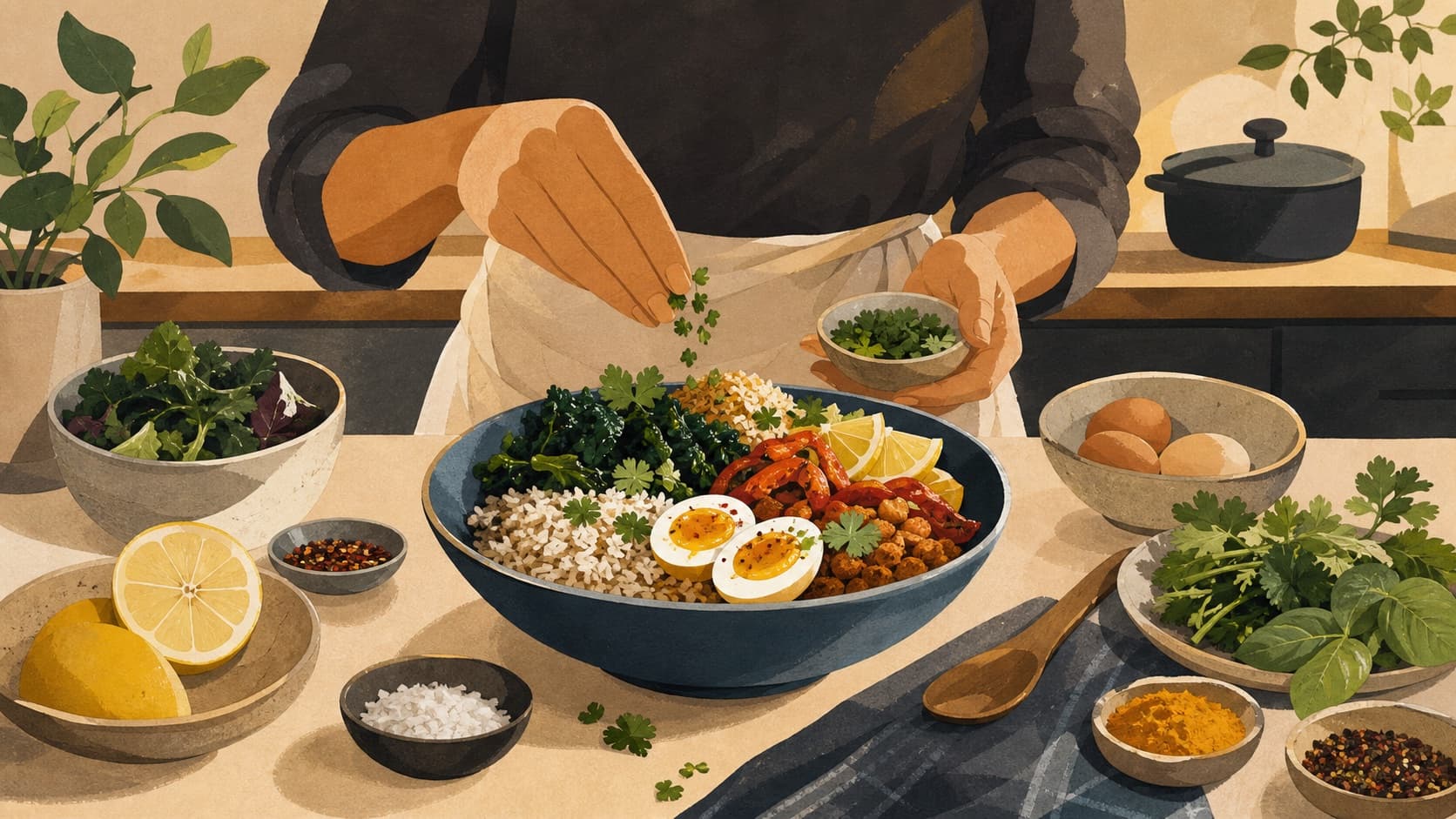
Recipes are valuable teachers, but they can make ordinary cooking feel more fragile than it is. A missing herb sends us back to search. A different pan changes the timing. Three half-used vegetables wait in the refrigerator while we shop for ingredients that match a new list.
Weeknight cooking becomes easier when you learn structures instead of memorizing instructions. A structure tells you what roles a meal needs—something substantial, something fresh, a strong flavor, and contrast—while leaving the exact ingredients open. It turns the question from “What recipe can I make?” into “What can these ingredients become together?”
Start with the anchor
Choose the ingredient that will make the meal feel complete. It might be rice, lentils, eggs, pasta, tofu, chicken, potatoes, or a sturdy piece of bread. The anchor determines the rough cooking time and suggests the rest of the plate.
If the anchor takes longest, start it first. This sounds obvious, but it is the central habit of calm cooking: work backward from the slowest component. Put rice on before chopping a quick salad. Heat the oven before seasoning vegetables. Bring pasta water to a boil while assembling everything else.
Build flavor in layers
Good flavor rarely comes from one heroic ingredient. It accumulates. Begin with fat, add an aromatic element, create depth through browning or spices, and finish with something bright. The exact expression changes across cuisines, but the sequence is remarkably portable.
- Fat: olive oil, butter, coconut milk, sesame oil, or yogurt.
- Aromatics: onion, garlic, ginger, spring onion, or whole spices.
- Depth: tomato paste, toasted spices, mushrooms, soy sauce, or browned edges.
- Brightness: lemon, lime, vinegar, fresh herbs, pickles, or raw onion.
Use contrast to make simple food satisfying
A meal with only one texture can taste flat even when it is well seasoned. Add contrast at the end: toasted seeds over soft lentils, cool yogurt beside roasted vegetables, crisp cucumber with warm rice, or breadcrumbs on pasta. Temperature, texture, acidity, and freshness all create contrast.
This is why a small garnish can matter more than another complex step. It gives each bite a beginning and an ending.
Taste for balance, not perfection
Before serving, taste and ask a few concrete questions. Does it need salt? Does it feel heavy enough to need acidity? Is there bitterness that a little sweetness could soften? Is the texture dry enough to need oil, broth, or yogurt? These questions are more useful than deciding only that something is “missing.”
Adjust in small amounts and taste again. Seasoning is a conversation with the food, not a test you pass on the first attempt.
Keep a flexible pantry
A useful pantry is not an inventory of aspirational ingredients. It is a set of components you already know how to combine. Keep two or three anchors, a few fast sources of flavor, and durable finishing ingredients. Restock what you repeatedly use rather than what an ideal cook is supposed to own.
Frozen vegetables, canned beans, eggs, noodles, lemons, yogurt, and a favorite spice blend can produce many different meals because each can play more than one role.
A final thought
Improvisation does not mean cooking without knowledge. It means carrying the useful part of many recipes inside a flexible framework. Start with an anchor, build flavor in layers, add contrast, and taste for balance. Dinner will not be identical every time—and that is the point.
More from Ajay Gaur
Your Attention Is a Budget: Spend It Like One
A practical way to protect focus without turning your life into an optimization project.
Why Walking Is Still a Serious Thinking Tool
Walking creates a rare middle distance from problems: close enough to think, far enough to see differently.
How to Read Technical Documentation Without Getting Lost
Documentation becomes easier when you stop treating it like a book and start using it like a map.